Sons of Liberty Gun Works Liberty Fighting Barrel Review
A budget-minded chrome-lined barrel with decent build quality, but disappointing real-world precision performance.
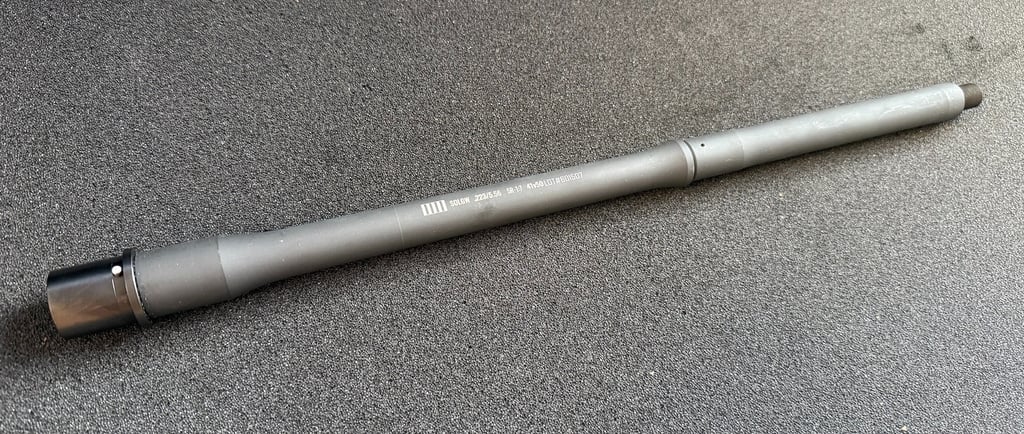
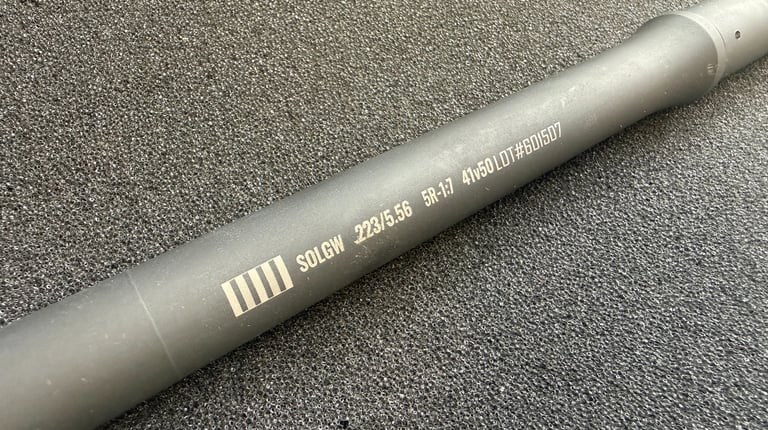
The Sons of Liberty Gun Works Liberty Fighting Barrel is one of SOLGW’s newer general-purpose chrome-lined offerings and appears to replace the older Combat V2 series. On paper, the specs are solid: 4150 CMV steel, chrome-lined bore, 5R rifling, .223 Wylde chamber, and a reasonably sized gas port. Unfortunately, while the overall build quality looked acceptable for the price point, the actual shooting performance from this particular sample was underwhelming.
This article is based on my own testing and experience with a single barrel sample and a limited selection of ammunition. Performance can vary between individual barrels. Information and testing data were derived from the supplied review notes and test documentation.
Bottom Line
The Liberty Fighting Barrel is priced in a fairly competitive part of the market, but the actual on-target performance from this sample makes it difficult to recommend over competing options.
The gas system felt smooth, the barrel appeared mechanically acceptable overall, and the contour makes sense for a practical-use rifle. But when compared against other chrome-lined barrels I’ve tested, especially at similar price points, the accuracy simply wasn’t there.
There are cheaper barrels that shoot better, and you don’t have to spend much more money to step into significantly better-performing options from manufacturers like Criterion, Centurion, or Geissele.
Pros & Cons
Pros
Reasonably priced for a chrome-lined barrel
Mid-weight contour balances well
Gas port sizing felt appropriate and smooth
Build quality generally looked acceptable
Tight barrel extension fit created a secure upper receiver interface
Cons
Precision performance was poor overall
PMC M855 performance was extremely disappointing
Match ammunition performance lagged behind competing barrels
Better-performing barrels exist at similar or slightly higher prices
Price & Availability
The Liberty Fighting Barrel is in the same general price range as offerings from:
Ballistic Advantage
Faxon
Rosco Manufacturing
At only a slightly higher price point, buyers can also consider:
Criterion
Geissele
Centurion Arms
That pricing structure is part of what makes this barrel difficult to justify based on the results from this sample. There are barrels that cost less and perform better, and there are barrels that cost only modestly more while offering significantly stronger overall precision potential.
When Would I Buy This Barrel?
Best Use Cases
General-purpose carbines
Training rifles
Defensive or duty-oriented builds
Shooters prioritizing durability over precision
The contour strikes a decent balance between rigidity and handling. At roughly 1.8 pounds, it avoids becoming excessively front-heavy while still maintaining enough material for reasonable heat management.
Less Ideal For
Precision-oriented builds
SPR-style rifles
Users specifically seeking strong match ammo performance
Shooters expecting premium-level consistency from a chrome-lined barrel
Core Specs
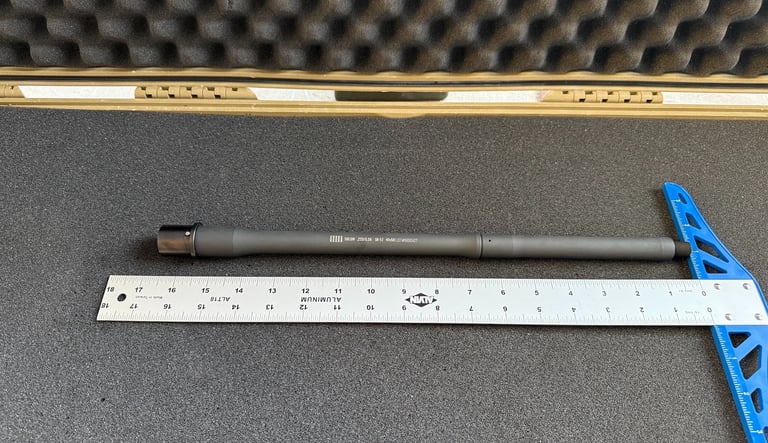
Length: 16"
Chamber: .223 Wylde
Twist Rate: 1:7"
Gas System: Mid-length
Material: 4150 CMV steel
Bore: Chrome-lined
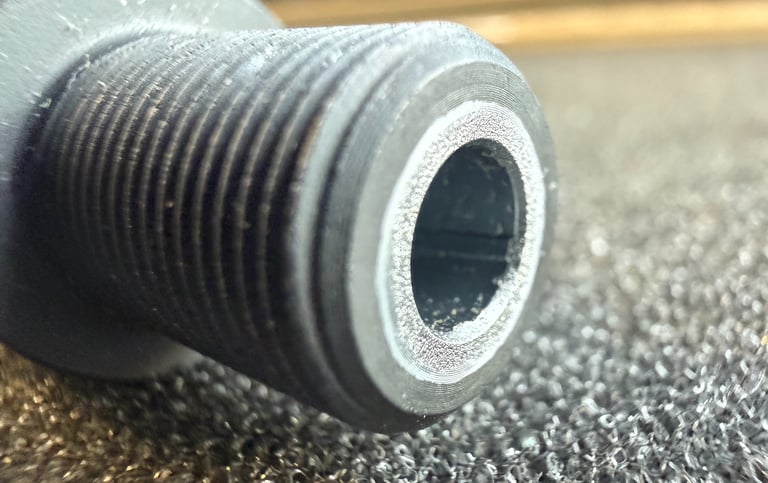
Exterior Finish: Phosphate
Rifling Method: Button rifled
Rifling Style: 5R
Muzzle Threads: 1/2x28
Weight: Approximately 1.8 pounds
One interesting choice here is the use of a .223 Wylde chamber in what is otherwise clearly positioned as a hard-use fighting barrel. Most manufacturers in this category would likely choose a standard 5.56 NATO chamber instead.
That said, I don’t necessarily view the Wylde chamber as a negative. It’s just somewhat unusual for this style of barrel.
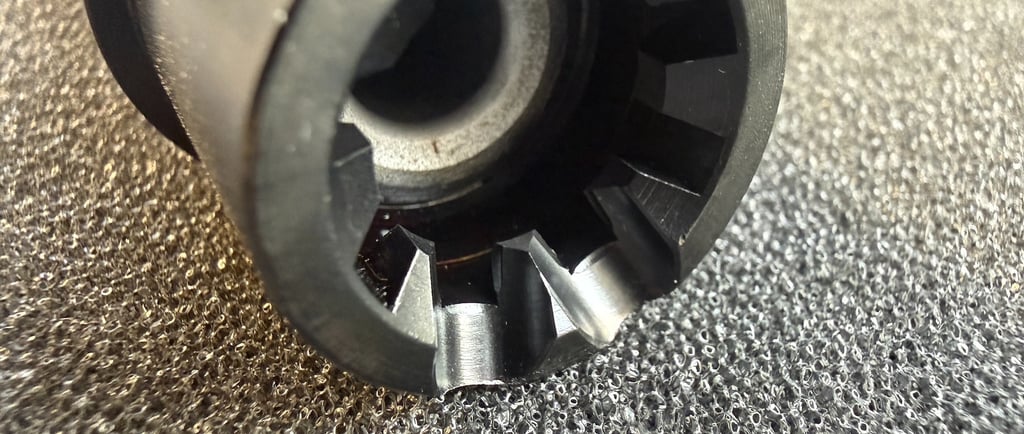
The manufacturer also states that the barrel uses a DLC-coated barrel extension and comes pre-dimpled for gas block installation.
Gauging & Measurements
Weight
The barrel weighed approximately 1.8 pounds, placing it solidly into the mid-weight category for a 16" barrel.
Gas Port Diameter
The gas port measured 0.075".
Compared against other 16" mid-length barrels I’ve measured, this falls around average to slightly below average in size, which likely contributed to the smooth recoil impulse during testing.
Headspace
Headspace measured roughly 0.002"–0.005" larger than minimum specification, which is completely reasonable for a new barrel.
Barrel Extension Fit
The barrel extension measured slightly oversized, requiring heat on the upper receiver during installation.
While slightly inconvenient during assembly, it created a very secure interface once installed.
Gas Block Journal
The gas block journal measured slightly undersized compared to average, resulting in a looser gas block fit than I would prefer.
Chamber Dimensions
The chamber gauged within spec.
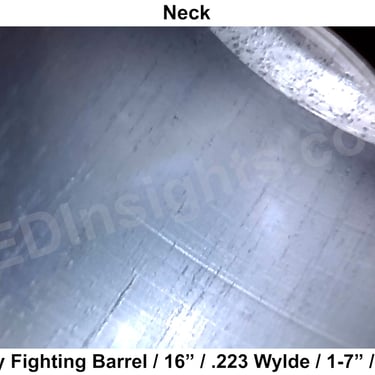
Borescope Findings
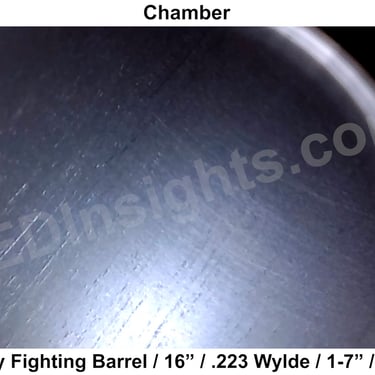
Chamber
The chamber looked generally fine with no major machining defects visible.
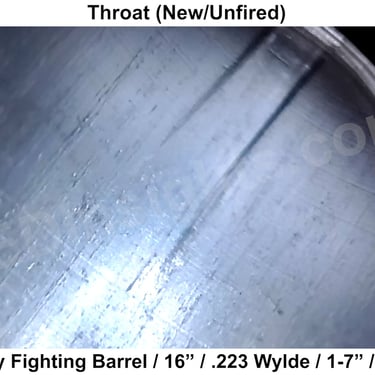
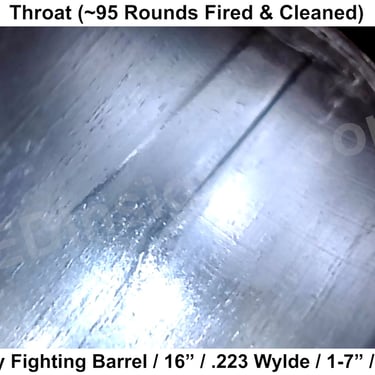
Throat
The throat appeared reasonably even and clean in the unfired condition, without any obvious severe tooling defects.
After approximately 100 rounds and cleaning, the chrome still appeared stable with no obvious deterioration.
Rifling
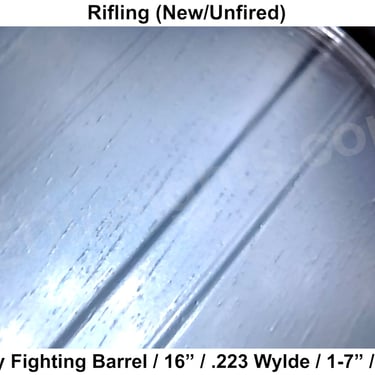
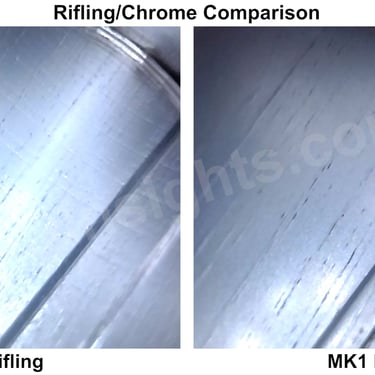
The 5R rifling generally looked good. However, there were visible longitudinal striation-like artifacts in the chrome lining throughout portions of the bore.
I’m not necessarily calling this a defect. In fact, I observed similar visual texture in the chrome lining of the SOLGW MK1 barrel I tested previously, and that barrel shot exceptionally well.
So while the appearance is unusual, it doesn’t automatically imply poor performance.
Gas Port
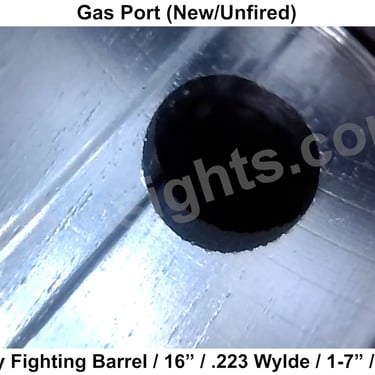
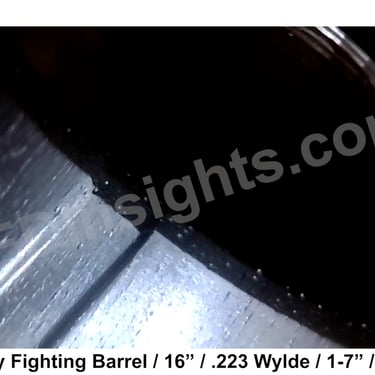
The gas port area looked acceptable overall with no major burr formation visible. There were some mild tooling marks near the port, but nothing especially alarming for this price range.
Crown
The crown was not perfect, but looked entirely reasonable given the price point.
Group Performance
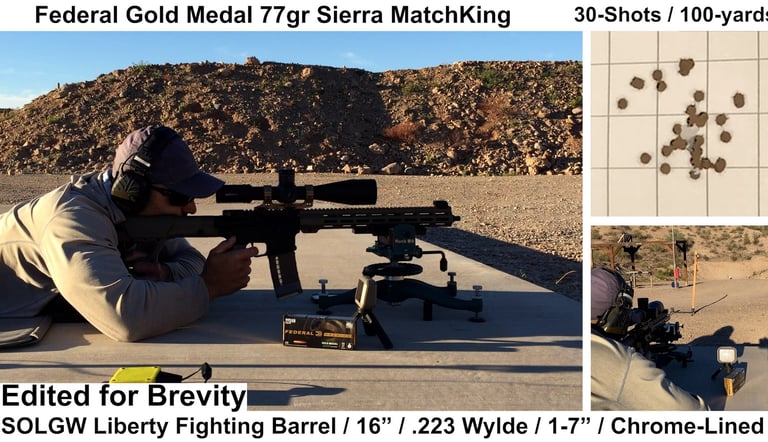
All groups were fired at 100 yards using 30-shot groups unless otherwise noted. The rifle was stabilized using a front rest and rear bag, and velocity data was captured with a Garmin chronograph. Mantis X and Shooters Global SG Pulse systems were used to monitor shooter-induced movement.
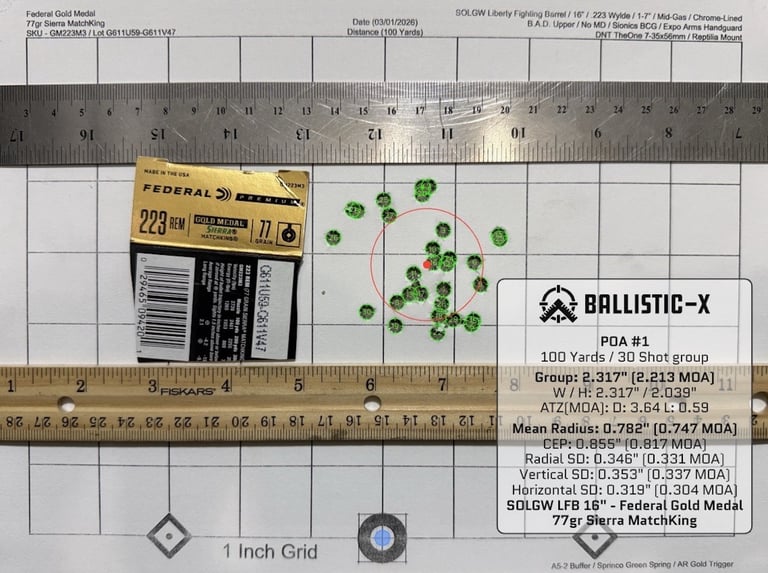
Federal Gold Medal Match 77gr SMK
This ended up being the best-performing load tested through the barrel.
Velocity
Average Velocity: 2378 fps
Standard Deviation: 29 fps
Extreme Spread: 102 fps
Precision
30-Shot Group Size: 2.213 MOA
Average 10-Shot Group: 2.1 MOA
A-ZED Score: 189 yards
The group itself looked somewhat unusual with a noticeable gap through the middle, but overall this was still clearly the strongest result from the barrel.
Even so, compared against the broader leaderboard of Federal Gold Medal groups I’ve shot, this barrel ranked near the bottom.
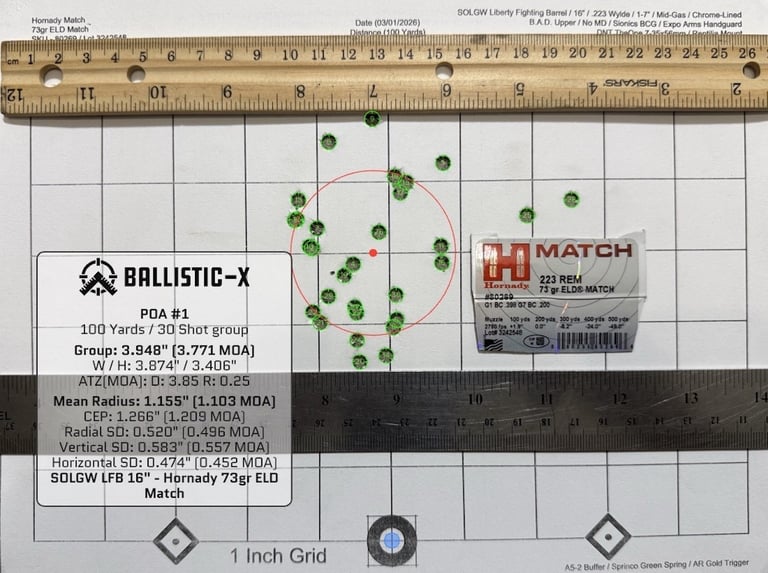
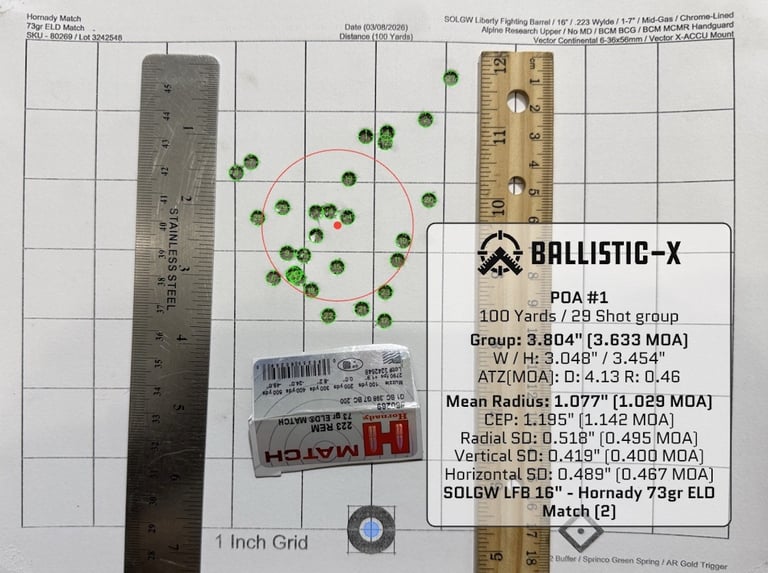
Hornady 73gr ELD Match
The Hornady performance was disappointing enough that I completely rebuilt the upper and repeated the test a week later using:
A different upper receiver
Different handguard
Different gas block
Different gas tube
Different optic setup
Despite all those changes, the results were nearly identical.
Group 1
Velocity: 2494 fps
SD: 31 fps
ES: 95 fps
30-Shot Group: 3.771 MOA
Average 10-Shot Group: 3.0 MOA
A-ZED: 128 yards
Group 2 (29 shots)
Velocity: 2503 fps
SD: 22 fps
ES: 96 fps
29-Shot Group: 3.633 MOA
Average 10-Shot Group: 3.0 MOA
A-ZED: 137 yards
Both groups ranked at the absolute bottom of the Hornady leaderboard among barrels I’ve tested.
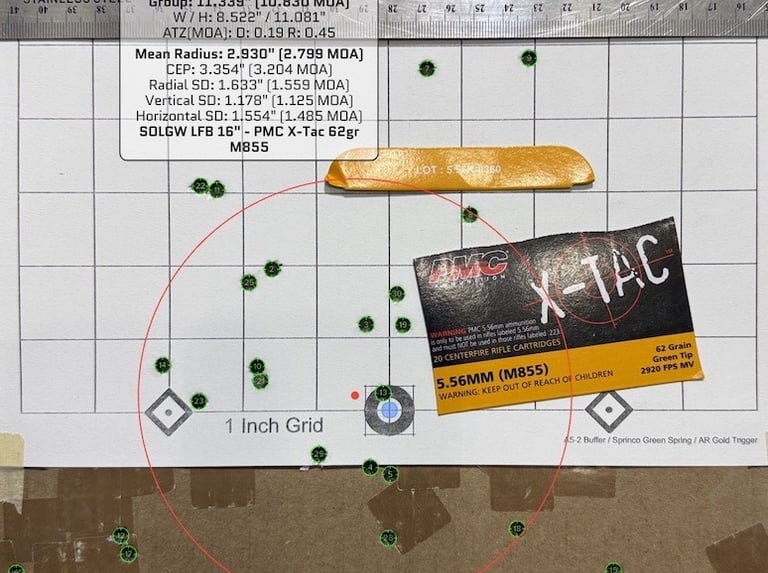
PMC X-TAC M855 62gr
The PMC M855 group was simply bad.
Velocity
Average Velocity: 2931 fps
SD: 21 fps
ES: 101 fps
Precision
30-Shot Group Size: 10.830 MOA
Average 10-Shot Group: 8.8 MOA
A-ZED Score: 50 yards
The cold bore shot landed dramatically high relative to the rest of the group, and overall dispersion was extremely large.
Out of every PMC M855 group I’ve tested, this barrel ranked dead last by a substantial margin.
Shooting Setup
Shooting Setup
Rifle Configuration
Upper Receiver: Bad Attitude Department / Alpine Research
Bolt Carrier Group: Sionics / BCM
Handguard: Expo Arms 15" / BCM MCMR 13"
Buffer: A5-2
Buffer Spring: Sprinco Green
Trigger: AR Gold
Optics: DNT TheOne 7-35x56 / Vector Continental x6 6-36x56
Optic Mounts: Reptilia / Vector
Environmental Conditions
Temperature ranged from approximately 60–70°F
Elevation approximately 1360 ft
Humidity approximately 19–48%
The barrel was cooled between groups using a leaf blower and chamber chiller. The bore was cleaned prior to testing.
Final Thoughts
The Liberty Fighting Barrel isn’t a disaster, but it also didn’t do much to distinguish itself positively in a very crowded market.
The general construction looked acceptable, the gas system was reasonably tuned, and nothing about the barrel screamed catastrophic QC failure. But ultimately, performance on target matters most, and this particular sample simply didn’t perform well compared to competing chrome-lined barrels I’ve tested.
If your primary goal is a reasonably priced general-purpose barrel, it may still meet your needs. But if accuracy is a major concern, there are better options available both below and above this price point.
Disclosure
Barrel was loaned to me by a subscriber
Ammunition was purchased independently
Some links in this article may be affiliate links from which I earn a commission
© 2026. All rights reserved.