Sons of Liberty Gun Works 13.9” Combat V2 CHF Barrel Review
A discontinued cold hammer forged barrel with an interesting feature set, but disappointing performance.
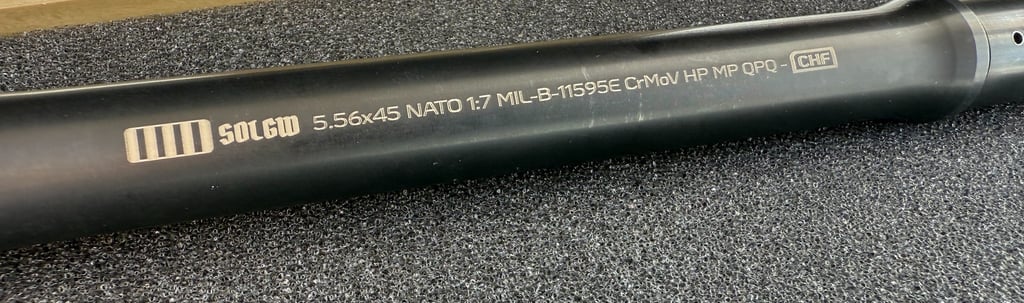
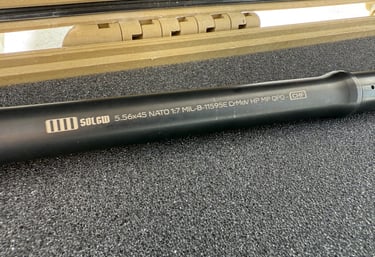
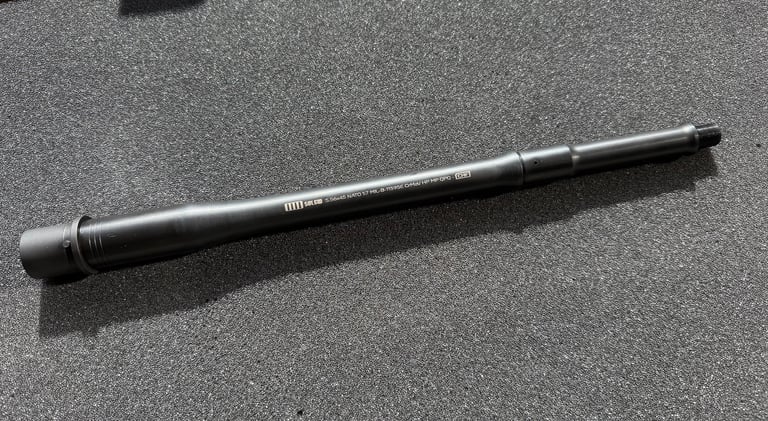
The Sons of Liberty Gun Works 13.9” Combat V2 CHF barrel was an interesting product when it was available. On paper, it checked a lot of boxes for a hard-use general-purpose barrel: cold hammer forged construction, QPQ/nitride treatment inside and out, mid-length gas, and a reasonably modern profile at a fairly approachable price point. Unfortunately, the actual shooting results from this particular example were underwhelming across all ammunition tested.
That said, not every barrel performs identically, and barrels are notoriously difficult to predict. This article reflects the performance of this specific sample.
Bottom Line
The SOLGW Combat V2 CHF barrel had a compelling feature set for a reasonably priced CHF barrel when it was still in production. The combination of cold hammer forging and QPQ/nitride treatment is relatively uncommon in the AR-15 market, where most CHF barrels are chrome-lined instead.
From a functional standpoint, the barrel appeared to be manufactured well, gauged within acceptable tolerances, and gassed reasonably well. Recoil impulse felt fine during testing, and ejection was consistent around the 3–4 o’clock range.
The major issue was simply performance. Accuracy with all three tested loads was poor relative to other barrels I’ve tested, including several other combat-oriented chrome-lined and nitrided barrels. Velocity was also somewhat low for a 13.9” barrel, which makes me suspect this particular barrel may have had a slightly oversized bore.
Pros & Cons
Pros
Appropriately gassed for a 13.9” mid-length setup
CHF + QPQ construction should provide excellent durability and corrosion resistance
Mid-weight profile keeps weight somewhat rear-biased for easier handling
Good dimensional consistency overall
Was reasonably priced when available
Gas block journal and barrel extension dimensions were well executed
Cons
Currently discontinued
Precision performance was poor with all tested loads
Velocity was lower than expected
Did not perform competitively against many other barrels in its category
Who Is This Barrel For?
Best Use Cases
This barrel makes the most sense for someone prioritizing:
Durability
Corrosion resistance
Smooth recoil characteristics
A practical duty-oriented setup
General-purpose use rather than precision shooting
The gas system on this barrel felt fairly well tuned during testing. Ejection was consistent, recoil impulse felt reasonable, and it did not seem excessively over-gassed.
That could make it easier to pair with a suppressor compared to some aggressively ported CHF barrels on the market.
Less Ideal For
This would not be my recommendation for someone heavily focused on precision or long-range performance.
All three tested loads produced fairly poor results relative to the rest of my database, including both match ammunition and bulk M855.
Comparisons
I have not personally tested many other CHF nitrided AR-15 barrels that I would strongly recommend from a precision standpoint.
However, among more traditional CHF chrome-lined barrels, I’ve generally had positive experiences with FN-produced barrels. The downside is that many FN CHF profiles and gas systems feel somewhat dated by modern standards and can sometimes be more aggressively gassed.
I’ve also had very good results with the SOLGW MK1 chrome-lined barrel. That barrel is not cold hammer forged, but overall I liked it substantially more from a performance standpoint.
Group Performance
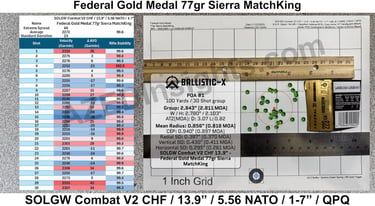
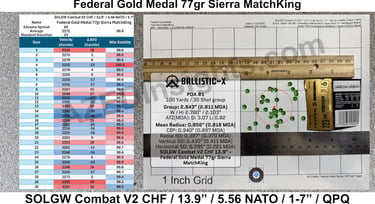
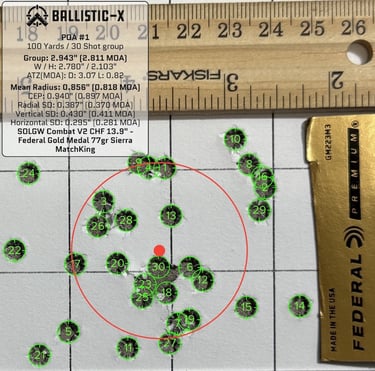
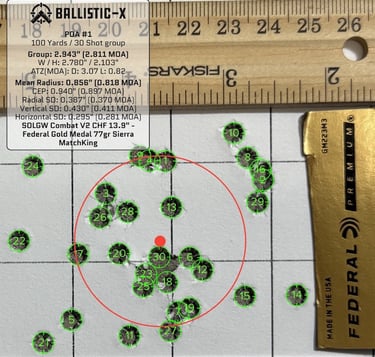
Federal Gold Medal Match 77gr SMK
Velocity
Average Velocity: 2272 fps
SD: 23 fps
ES: 80 fps
Velocity seemed somewhat slow for a 13.9” barrel, although testing conditions were relatively cool at 53°F.
Accuracy
30-Shot Group Size: 2.811 MOA
Mean Radius: 0.818 MOA
Average 10-Shot Group: 2.3 MOA
A-ZED Score: 173 yards
Out of 38 groups I’ve shot with Federal Gold Medal Match 77gr, this barrel ranked last.
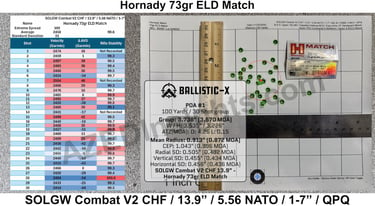
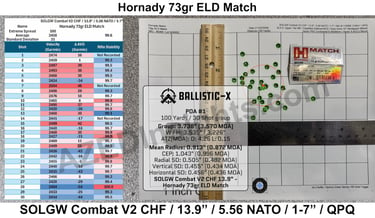
Hornady 73gr ELD Match
Velocity
Average Velocity: 2458 fps
SD: 31 fps
ES: 100 fps
The velocity consistency here was not particularly impressive either.
Accuracy
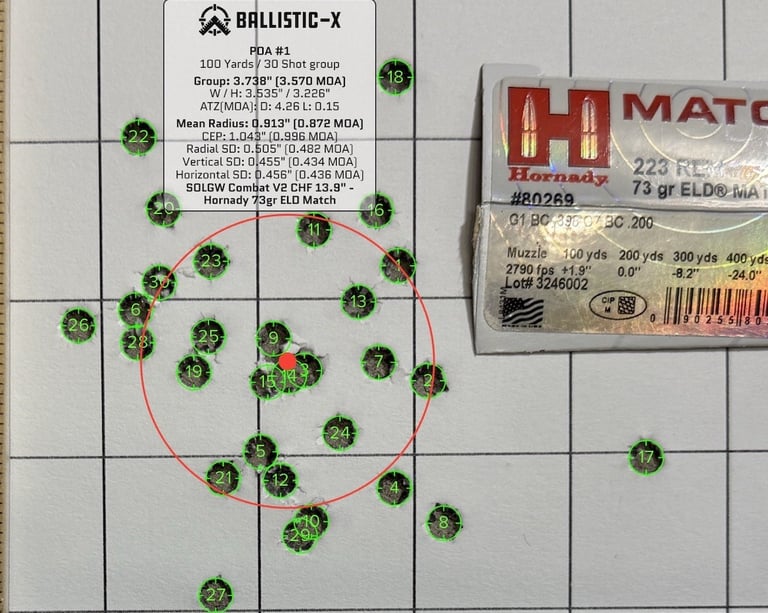
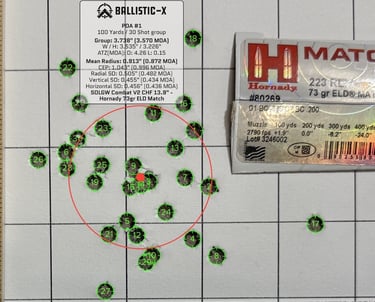
30-Shot Group Size: 3.570 MOA
Mean Radius: 0.872 MOA
Average 10-Shot Group: 2.7 MOA
A-ZED Score: 162 yards
This barrel ranked 16th out of 17 groups I’ve tested with Hornady 73gr ELD Match.
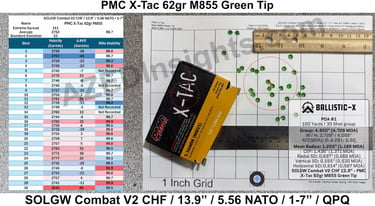
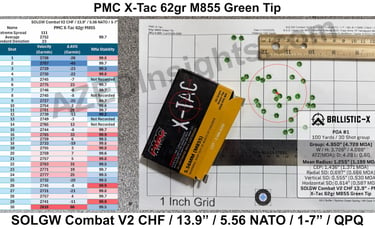
PMC X-TAC M855 62gr
Velocity
Average Velocity: 2752 fps
SD: 23 fps
ES: 111 fps
Accuracy
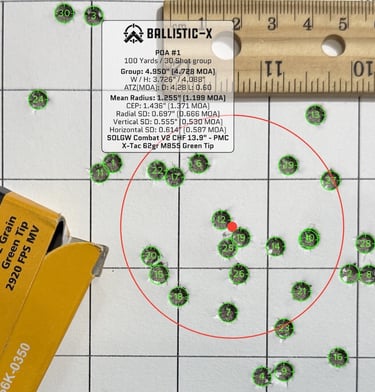
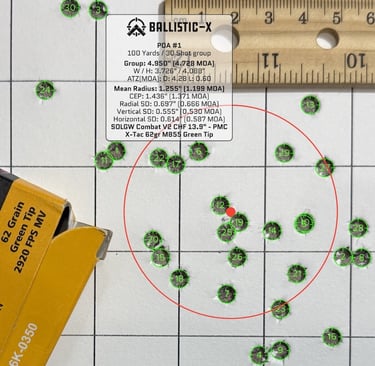
30-Shot Group Size: 4.728 MOA
Mean Radius: 1.199 MOA
Average 10-Shot Group: 3.9 MOA
A-ZED Score: 118 yards
Even accounting for the limitations of bulk M855 ammunition, the results here were still poor relative to many other barrels I’ve tested with PMC M855.
Out of 23 PMC M855 groups in my database, this barrel ranked 22nd.
Borescope Findings
Overall Impression
The owner of this barrel had approximately 200 rounds through it before sending it to me. Overall, nothing observed through the borescope appeared particularly alarming.
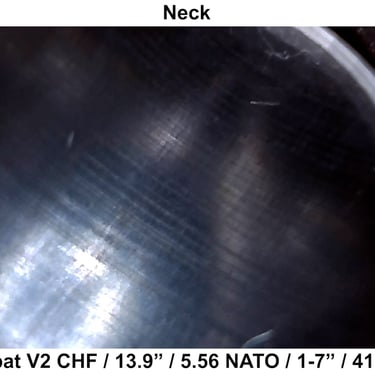
Because of the dark QPQ finish, visual inspection inside the bore was somewhat more difficult than with a chrome-lined or stainless barrel.
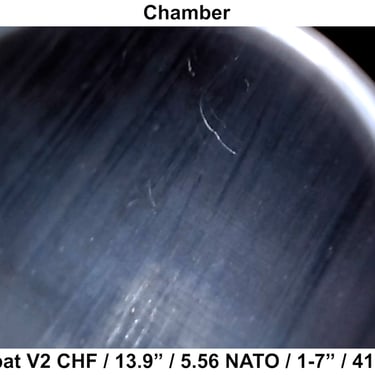
Chamber
The chamber appeared to have been cut with a reamer rather than forged. Some people assume all CHF barrels use forged chambers, but that is not always the case. Both approaches are common and perfectly acceptable.
The chamber itself looked fine overall.
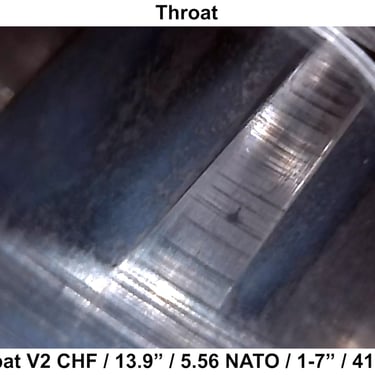
Throat
Some of the black surface coloration near the throat had worn away, which is normal on nitrided barrels. That does not mean the nitride treatment itself has been removed; it’s largely just the visible finish changing.
The lead and start of the rifling looked relatively even, and the machining marks did not appear especially deep or concerning.
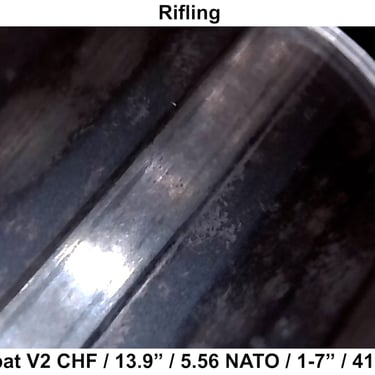
Rifling
The rifling appeared well formed overall, and I did not observe anything particularly alarming.
This barrel used more traditional rifling geometry rather than SOLGW’s newer P3-style rifling.
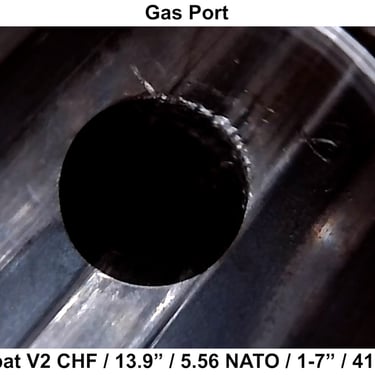
Gas Port
The gas port looked clean and well executed without anything visibly unusual.
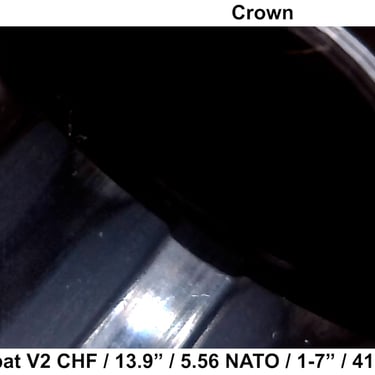
Crown
The crown also looked good overall, without any major burrs, rough spots, or visible defects.
Core Specifications
Length: 13.9”
Chamber: 5.56 NATO
Twist Rate: 1:7
Gas System: Mid-length
Material: 4150 CMV
Bore Treatment: QPQ/Nitride inside and out
Rifling Method: Cold Hammer Forged
Muzzle Threads: 1/2x28
Weight: 1.66 lbs
Gas Block Journal: 0.750”
Gas Port Diameter: 0.078”
Design Philosophy
The specs on this barrel are clearly geared toward a hard-use or duty-oriented role rather than maximum precision.
Cold hammer forging and nitride treatment both emphasize durability and corrosion resistance. The mid-length gas system and moderate contour also help keep the rifle relatively smooth and practical for general-purpose use.
Again, I still conceptually like the idea of a CHF nitrided barrel. I just personally haven’t yet tested one that produced particularly impressive precision results.
Gauging and Measurements
Weight
The barrel weighed approximately 1.66 pounds, placing it solidly into the mid-weight category.
Gas Port
Measured gas port diameter was 0.078”, which felt appropriate for a 13.9” mid-length setup.
Headspace
Headspace measured approximately 0.002”–0.005” over minimum 5.56 NATO specification, which is comfortably within the normal serviceable range.
Chamber Dimensions
The chamber dimensions gauge passed, indicating the chamber dimensions were at least minimum specification.
Barrel Extension Fit
Measured barrel extension diameter was 0.99930”, slightly larger than average, which produced a fairly tight fit in the upper receiver.
Gas Block Journal
Measured gas block journal diameter was 0.74990”, essentially dead-on nominal size and resulting in a tight gas block fit.
Visual Inspection
Overall machining and assembly quality appeared fine during inspection.
The barrel included a gas block set screw dimple from the factory, and the owner additionally drilled the barrel for a cross pin.
Shooting Setup
All groups in this article were fired:
At 100 yards
Using 30-shot groups
With the barrel cooled between groups using a leaf blower and chamber chiller
From a stabilized front rest and rear bag
With optic magnification around 30–35x
Using SG Pulse and Mantis X systems to monitor shooter-induced error
With a cleaned bore prior to testing
Build Configuration
Upper Receiver: Bad Attitude Department
Handguard: Expo Arms 10.5”
BCG: Classified Defense
Buffer: A5-2
Buffer Spring: Sprinco Green
Trigger: AR Gold
Optic: Vector Optics Continental x6 6-36×56
Temperature: 53°F
Elevation: 1360 ft
Results reflect this specific barrel under these test conditions. Performance may vary between individual examples.
Disclosure
Barrel donated to the channel by a subscriber
All ammunition was purchased by me
Optic provided by Vector Optics
Some of the links on this website may be affiliate links. If you purchase a product through one of these links, I may earn a small commission at no additional cost to you. Those commissions help support the channel and website by offsetting the cost of ammunition, testing equipment, range time, and producing future reviews and comparisons.
All opinions and conclusions in this article are based on my own testing and experience. Affiliate relationships do not influence the results or recommendations presented here.

© 2026. All rights reserved.