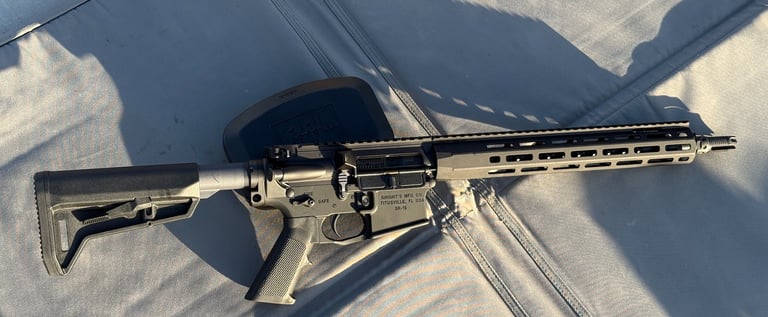
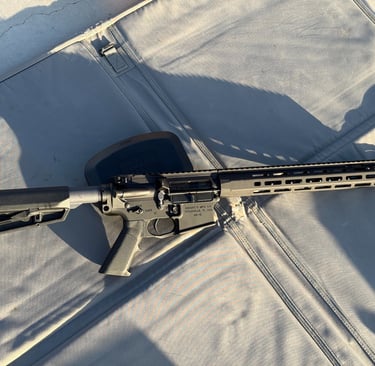
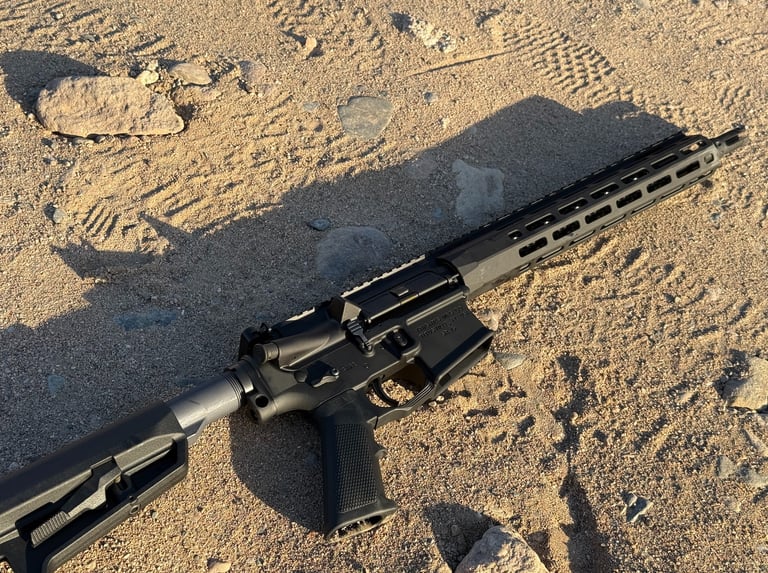
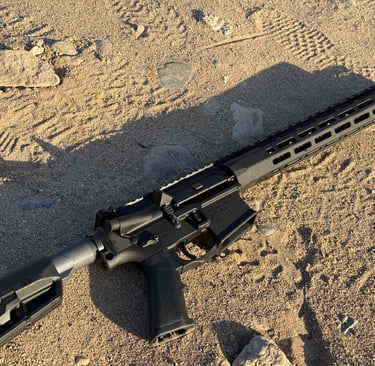
Knight’s Armament KS-1 Rifle Review (13.7”)
A Duty Rifle With Premium DNA. But Does the Performance Justify the Price?
RIFLE REVIEW
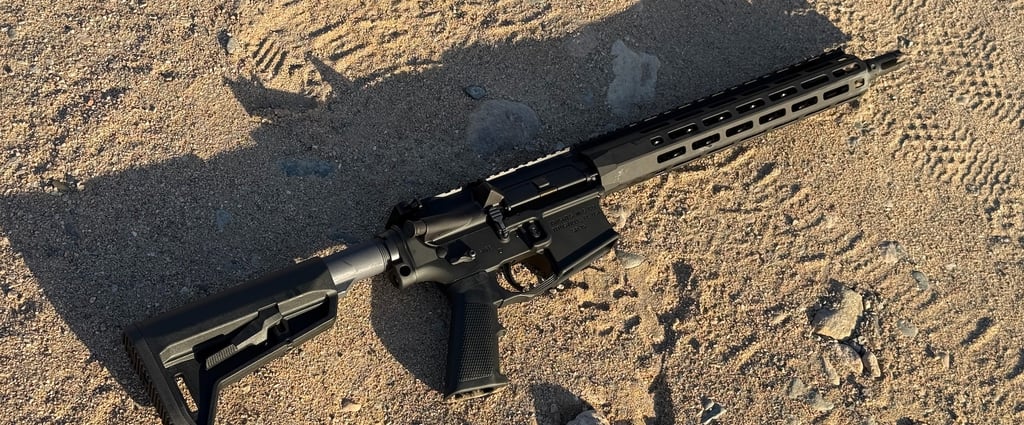
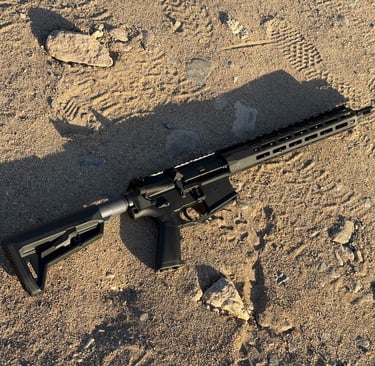
Bottom Line
Price to performance is not particularly impressive
Recoil impulse is excellent, very smooth and controlled
Rifle shows noticeable ammo sensitivity
Best groups came from Federal Gold Medal 77gr and Sierra 69gr MatchKing
PMC M855 and Hornady 73gr ELD Match performed poorly
Pros / Cons
Pros
32CrMoV12-10 chrome-lined barrel → extremely durable material
Well-gassed system → smooth recoil and carrier velocity
Very good overall shooting experience
Trigger is good for a stock setup
KAC “coolness factor” and pedigree
Cons
Relatively expensive
Heavy use of proprietary components
Limited reputation for strong customer service / warranty support
Replacement parts can be difficult to source
Performance does not clearly justify the price
Price & Availability
The Knight’s Armament KS-1 sits firmly in the premium tier of the AR-15 market.
Pricing is high compared to most comparable rifles, especially when you look strictly at performance. While you are getting high-end materials and KAC’s design philosophy, the accuracy results here don’t clearly separate it from less expensive options.
Availability is another factor to consider.
Like many KAC products, the KS-1 is not consistently in stock, and when it does show up, it tends to sell quickly. That limited availability can make it difficult to:
Shop for competitive pricing
Replace parts or source complete rifles
Standardize on the platform long-term
If you’re set on a KS-1, it’s more of a “buy it when you find it” situation rather than something you can reliably pick up anytime.
Group Performance
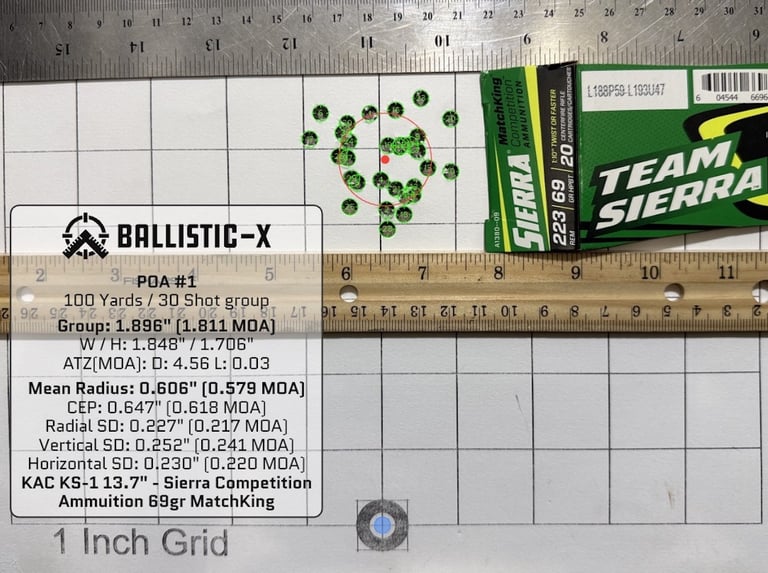
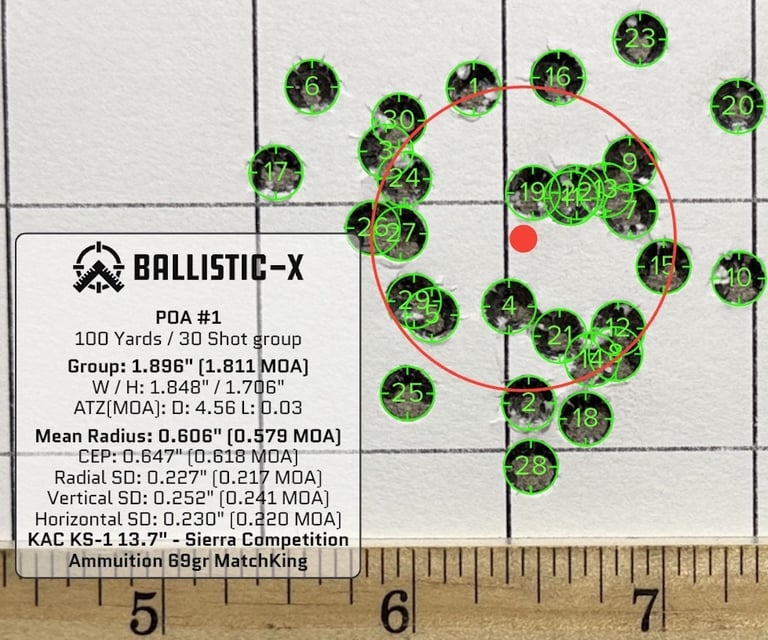
Sierra 69gr MatchKing Competition
Avg Velocity: 2484 fps
SD: 30 fps
30-Shot Group: 1.811 MOA
Mean Radius: 0.579 MOA
A-ZED: 244 yards
Avg 10-shot Group: 1.7 MOA
Takeaway:
Best-performing load. Solid, consistent group with no major outliers.
Unfortunately, this ammo appears to be discontinued
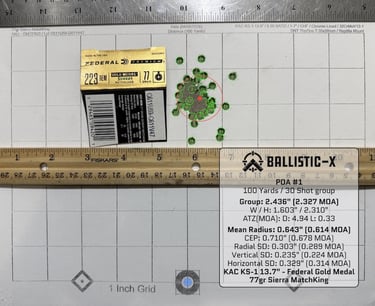
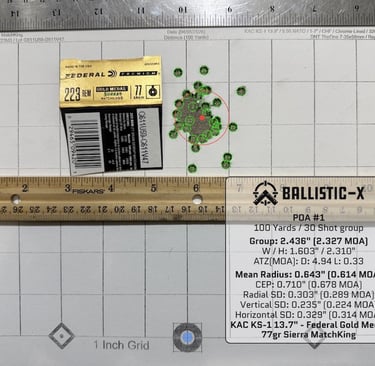
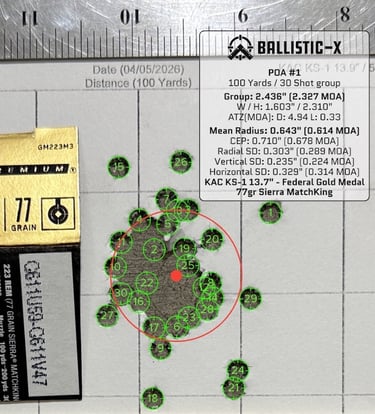
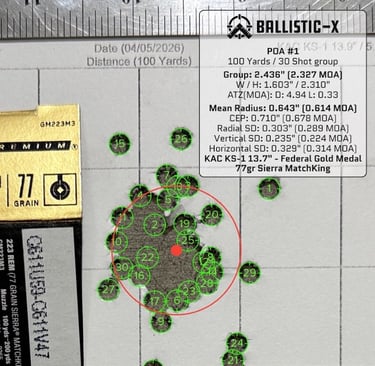
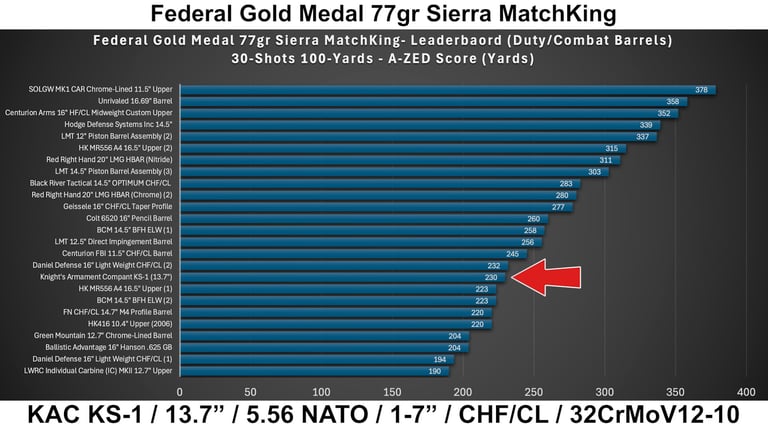
Federal Gold Medal 77gr SMK
Avg Velocity: 2259 fps
SD: 18 fps
30-Shot Group: 2.327 MOA
Mean Radius: 0.614 MOA
A-ZED: 230 yards
Avg 10-shot Group: 2.0 MOA
Takeaway:
Performance was acceptable for a durability/reliability focused AR-15.
27th out of 37 overall groups
17th out of 25 duty-style barrels
This puts the KS-1 firmly mid-pack.
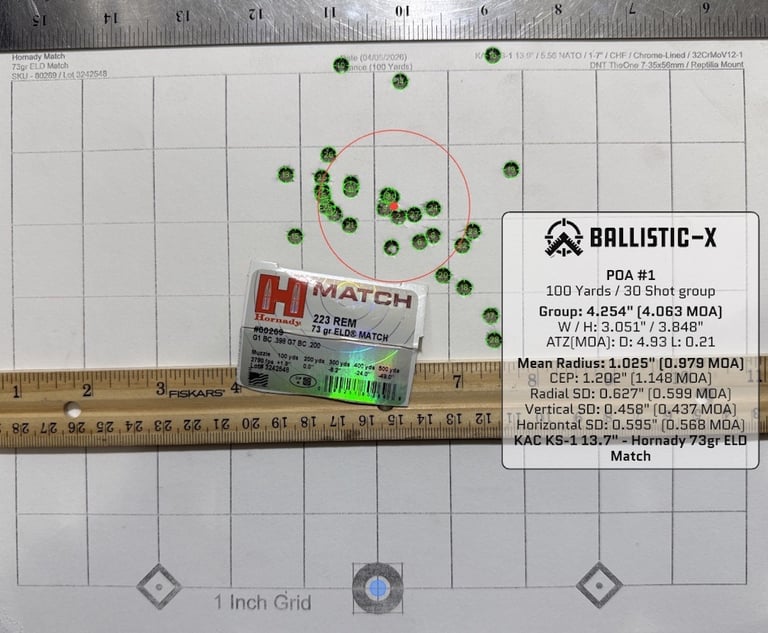
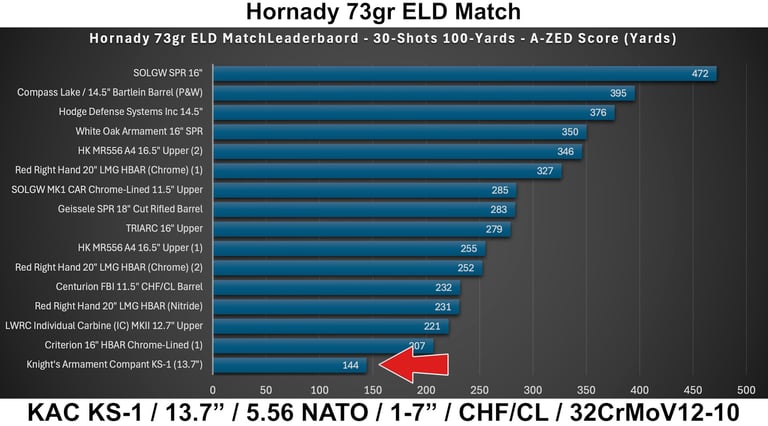
Hornady 73gr ELD Match
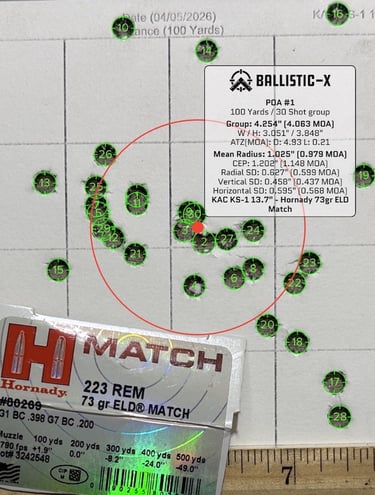
Avg Velocity: 2368 fps
SD: 27 fps
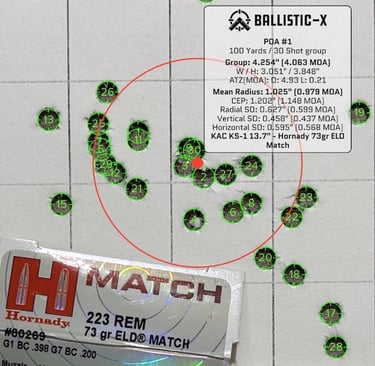
30-Shot Group: 4.063 MOA
Mean Radius: 0.979 MOA
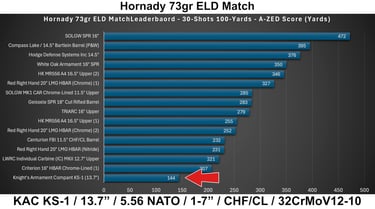
A-ZED: 144 yards
Avg 10-shot Group: 3.1 MOA
Takeaway:
This load performed very poorly in the KS-1. Last place among your tested groups with this ammo. Clear indication of ammo sensitivity.
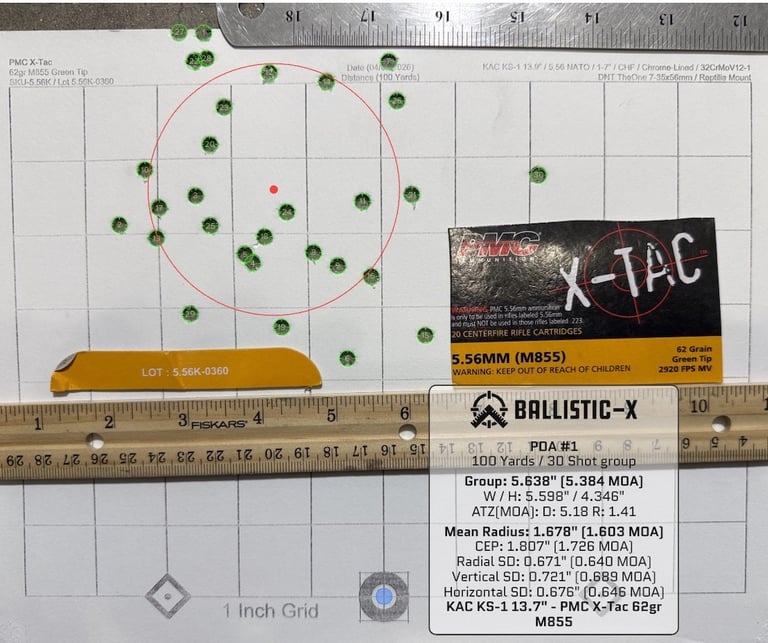
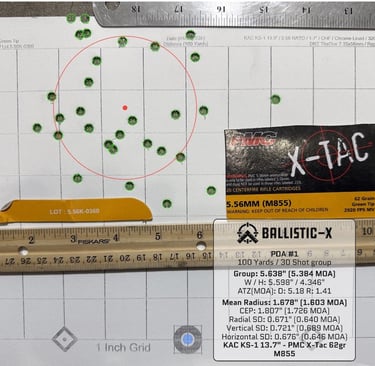
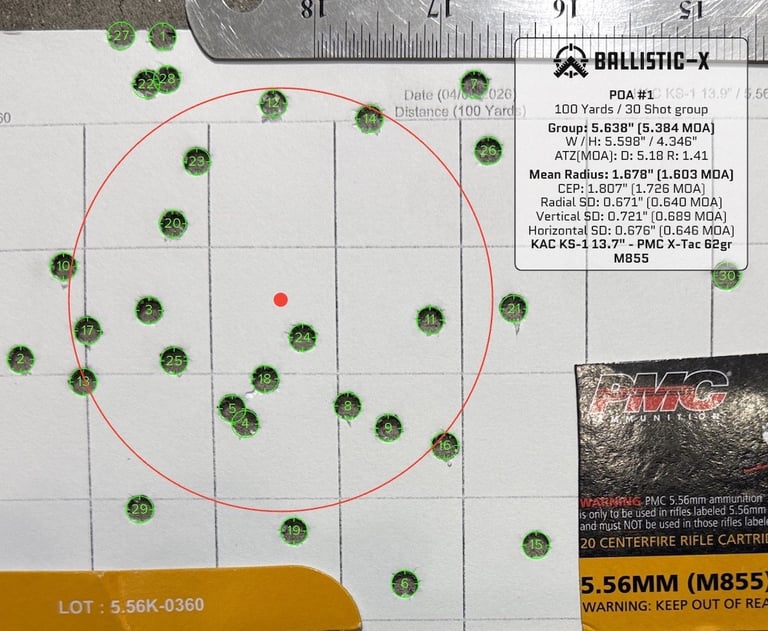
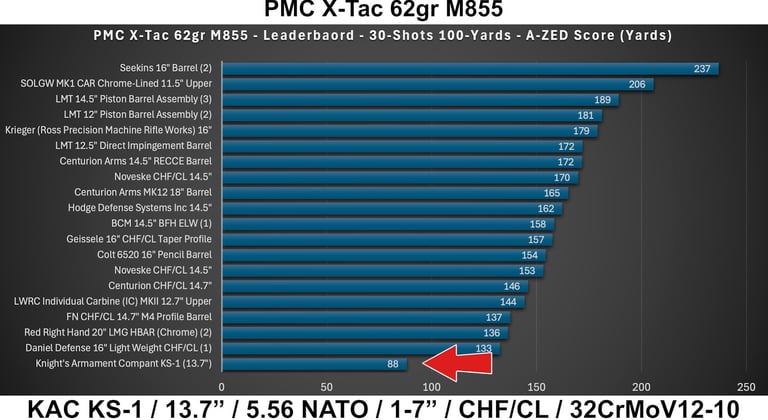
PMC X-Tac M855 (62gr)
Avg Velocity: 2784 fps
SD: 25 fps
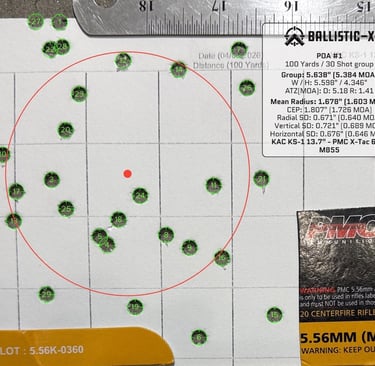
30-Shot Group: 5.384 MOA
Mean Radius: 1.603 MOA
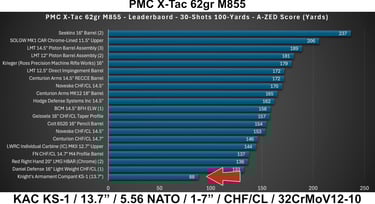
A-ZED: 88 yards
Avg 10-shot: 4.5 MOA
Takeaway:
Not expected to be a precision load, but still underperformed relative to peers. Last place out of 20 groups with this ammo.
Shooting Experience
This is where the KS-1 really stands out.
The rifle feels well-balanced and properly gassed, which makes it easy to shoot well over longer strings.
The trigger is good for a stock trigger and well suited for the likely use case of this rifle.
When / Why Would I Buy This Rifle?
Best Use Cases
Specifically want Knight’s Armament
Priority is durability over precision
Interest in a 32CrMoV12-10 steel barrel
Value a smooth shooting experience
Less Ideal For
Buyers focused on price-to-performance
Users who want easy access to spare parts
Precision-focused shooters expecting top-tier accuracy
Anyone concerned with manufacturer support responsiveness
Comparisons
A relevant comparison is Sons of Liberty Gun Works MK1:
Typically less expensive
Fewer proprietary components
In my experience, strong performance
However:
SOLGW does not currently offer 32CrMoV12-10 barrels
Limited ambidextrous features
So the trade-off becomes:
KAC → durability + brand + proprietary design
SOLGW → value + accessibility + performance
Conclusion
The Knight’s Armament KS-1 is a well-built, smooth-shooting duty rifle with:
Strong internal quality
Excellent recoil characteristics
High durability potential
But…
It does not separate itself in accuracy, and when combined with:
High price
Proprietary ecosystem
…it becomes difficult to justify purely on performance.
If you want:
A premium-feeling, durable duty rifle → this makes sense
If you want:Best performance per dollar → there are better options
Test Setup & Conditions
Methodology Note
This standardized setup is used across my tests whenever possible to maintain consistency and allow for more meaningful comparisons.
Optic Setup
Optic: DNT TheOne 7–35×56mm
Mount: Reptilia 34mm AUS
Support Equipment
Front Rest: Caldwell The Rock BR Front Rest
Rear Bag: Protektor
Chronograph: Garmin Xero C1 Pro
Environmental Conditions
Temperature: ~71–75°F
Humidity: 18%
Pressure: 29.99 inHg
Elevation: ~1360 ft
Testing Protocol
Distance: 100 yards
Group Type: 30-shot groups
Rationale:
30-shot groups better represent true dispersion
Mean Radius/AZED used to Reduce the influence of outliers
30-shots fired in succession to replicate sustained fire with barrel heat buildup as one would encounter in a match or other practical scenario
Additional Notes:
Point of impact intentionally offset to preserve aiming point
Inspection Equipment:
Disclosure
Rifle: Loaned by James from East Valley Tactical
Ammo:
Sierra 69gr SMK provided by James
All other ammo purchased by me
Optic: DNT TheOne 7-35x56mm provided by DNT Optics

© 2026. All rights reserved.